Whirligigs: The Antique Folk Art That Spins With Charm
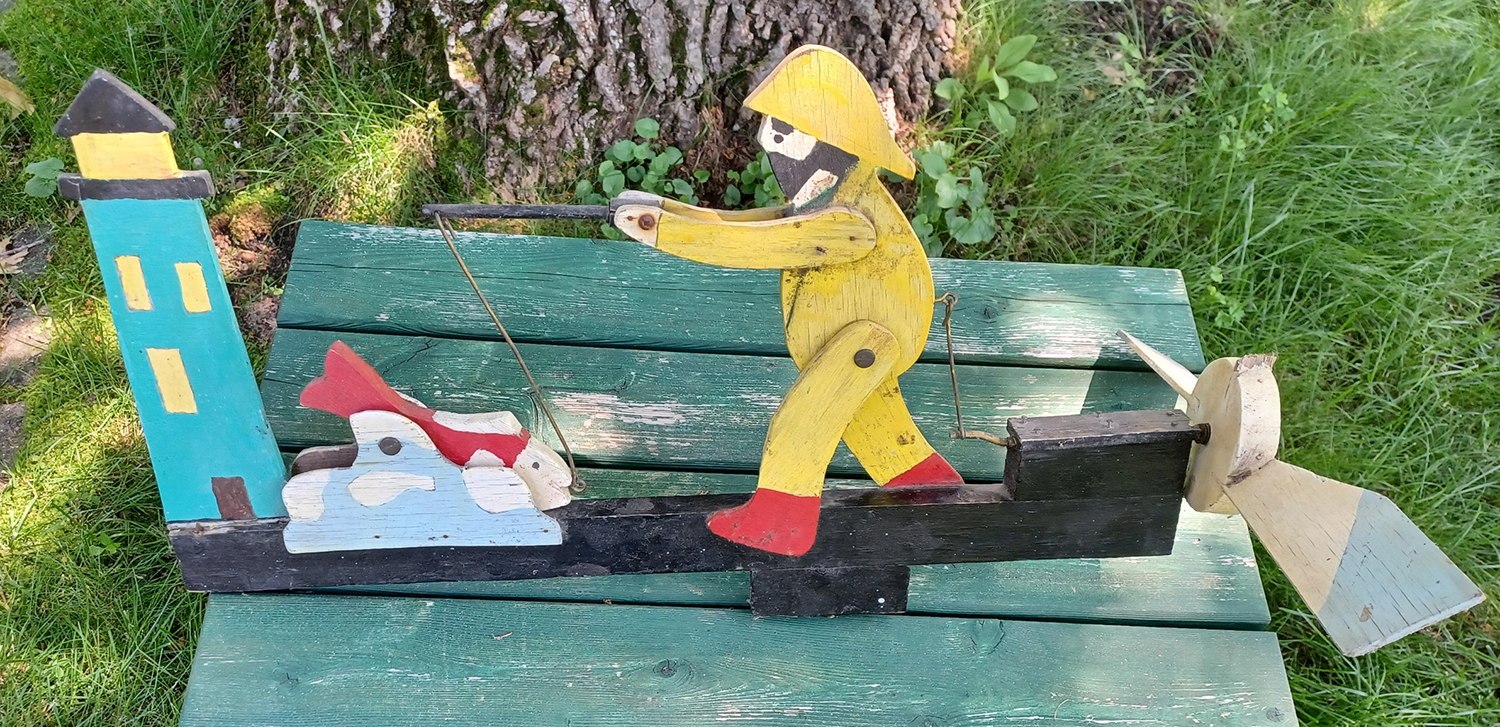
Images from Sally Thompson's personal collection
Among the most whimsical and captivating pieces of American folk art are antique whirligigs—those charming wind-driven contraptions that spin, twirl, and dance in the breeze. Often made of wood, metal, or a combination of both, these delightful objects were traditionally mounted on fences, barns, porches, and garden stakes. Though they might appear simply as rustic yard decorations, whirligigs are rich with cultural meaning, regional character, and a long history that makes them highly collectible today.
The Origin of Whirligigs
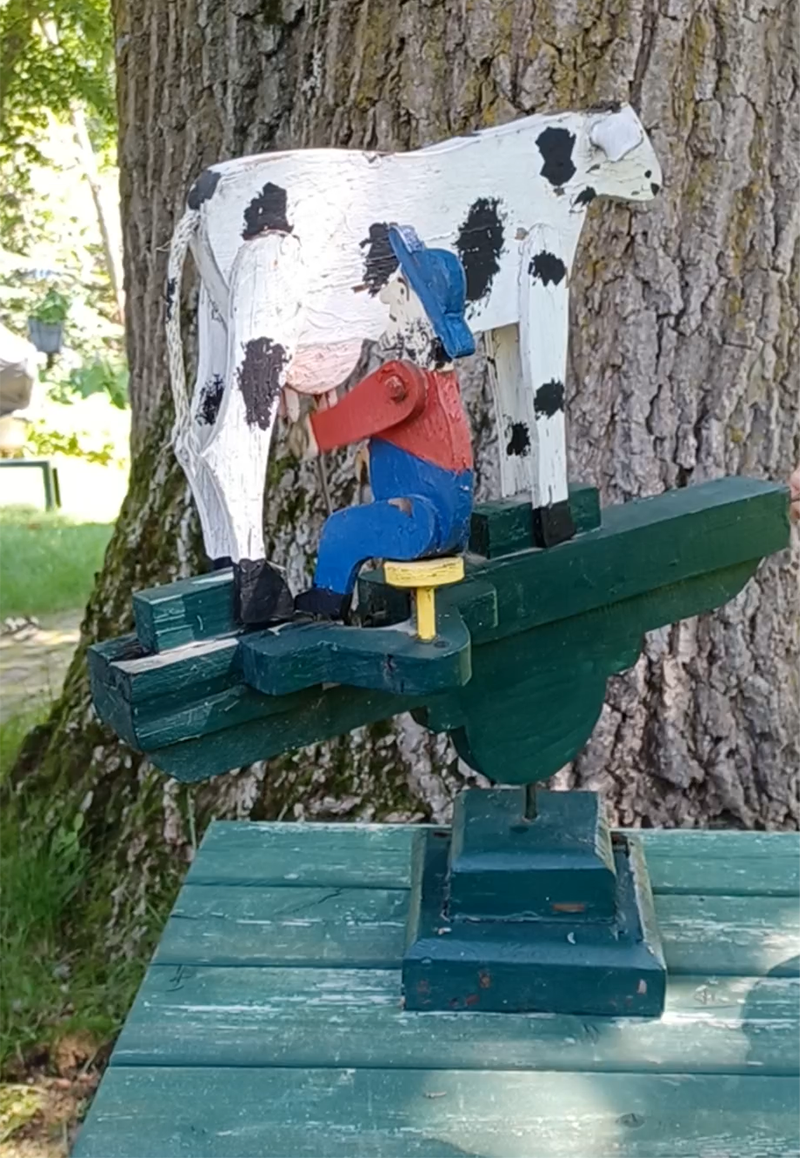
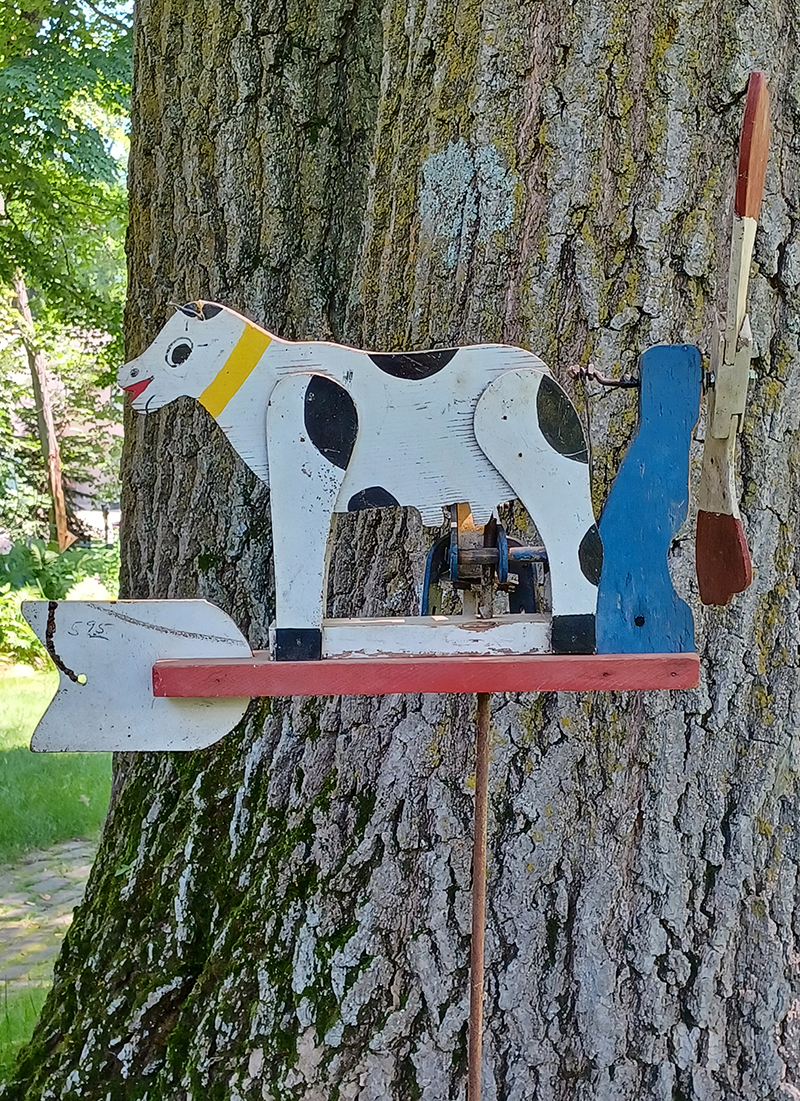
The exact origin of whirligigs is difficult to pinpoint, but similar wind toys have been found in cultures across the globe, including ancient China and medieval Europe. In the United States, they began appearing prominently in the 18th and 19th centuries, crafted by rural artisans, farmers, and woodworkers who used available materials to create animated figures powered solely by the wind. These early American examples were often humorous, narrative, or symbolic—featuring scenes from everyday life like farmers milking cows, fishermen hauling in their catch, or soldiers marching in rhythm.
By the late 1800s and early 1900s, whirligigs had become a staple of American yard art, especially in the South and Appalachia. They reflected not only the maker’s creativity and skill, but also the social and political ideas of the day. Some were purely decorative; others had more practical uses, serving as weather vanes or scarecrows in vegetable gardens.
Forms and Functions
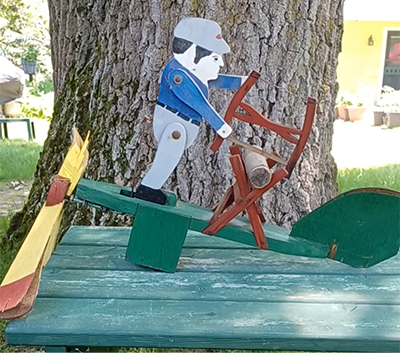
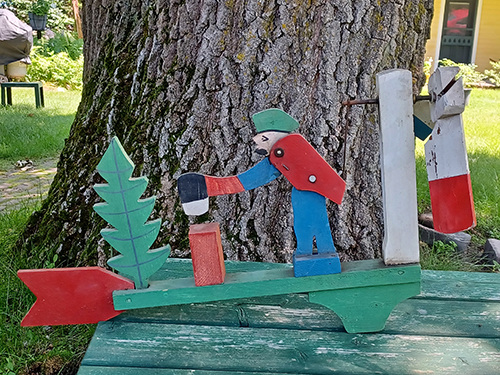
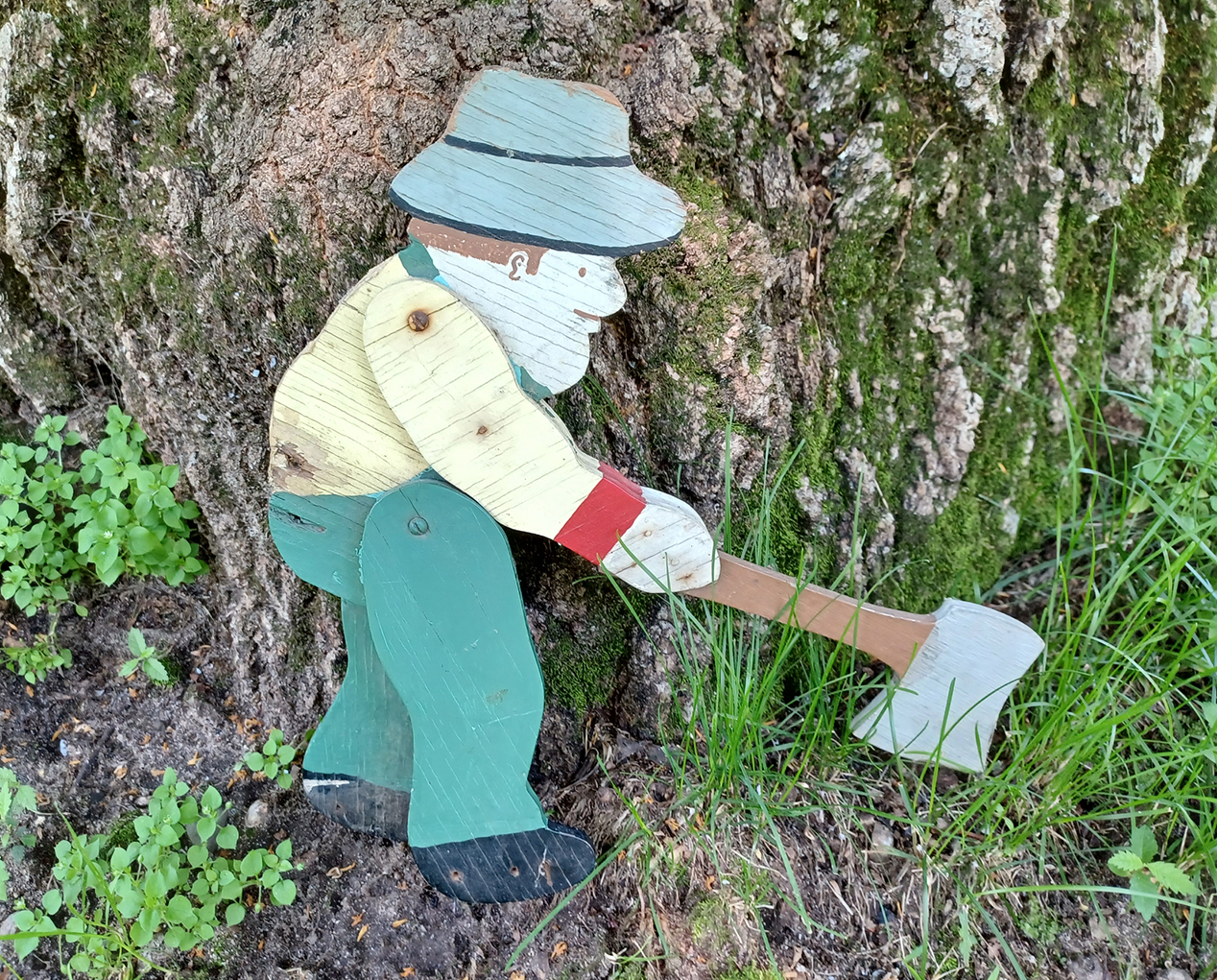
Antique whirligigs range from simple spinning propellers to elaborately carved kinetic sculptures with multiple moving parts. Some have arms that flap, legs that kick, or hammers that pound. These figures often mimic people or animals in motion. One classic example is the "farmer chopping wood," where the motion of the wind turns a propeller that causes the figure's arm to move up and down with a tiny axe in hand. Others portray patriotic scenes, folk heroes, or allegorical characters.
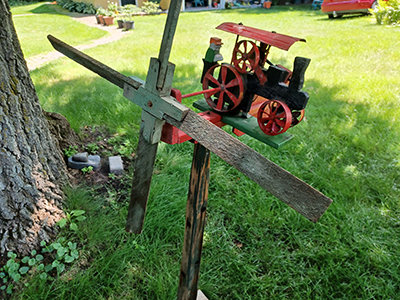
Materials used in early whirligigs were typically whatever could be found—scraps of pine, repurposed tin, old paint cans, nails, and fencing wire. Paint was applied liberally and boldly, using bright colors to catch both the eye and the wind. Over time, weathering added to their charm, giving them the desirable patina collectors love today.
Why Collectors Love Them
For collectors of folk art and Americana, antique whirligigs hold a special place. They represent a fusion of creativity, motion, and history. Each one is unique, hand-crafted by an individual with their own vision and ingenuity. No two are exactly alike, and the best examples show both artistic flair and mechanical sophistication.
Their value depends on factors like age, condition, region of origin, subject matter, and of course, motion. Pieces attributed to known folk artists—such as the prolific 20th-century maker Vollis Simpson—can command high prices at auction. Even anonymous pieces can sell for hundreds or thousands of dollars if they feature rare subjects or particularly expressive carving.
Whirligigs also appeal to interior decorators and landscape designers looking to add personality to a home or garden. Their motion draws the eye, while their rustic charm fits well with farmhouse, primitive, or country styles.
Preserving the Past
Because of their outdoor use, many antique whirligigs have not survived the elements. Wood rots, paint fades, and mechanisms rust or seize up over decades. For that reason, examples in good condition are increasingly rare. Some collectors choose to restore them—carefully replacing parts or repainting with period-accurate colors—while others prefer to keep the aged appearance intact, seeing the wear and patina as part of their story.
Museums, such as the American Folk Art Museum in New York, have begun to recognize the artistic and cultural value of whirligigs, preserving them for future generations. They are also featured in books, exhibitions, and documentaries on American folk art.
The Joy of Antique Whirligigs
Whether spinning atop a fence post or resting on a shelf in a collector’s home, antique whirligigs bring joy, nostalgia, and a touch of whimsy wherever they go. More than just yard ornaments, they are kinetic sculptures that tell stories—of rural life, individual creativity, and the enduring power of wind to bring art to life. For those who collect them, the hunt for the next great piece is as thrilling as watching one dance in the breeze.
If you're looking to add to your collection, check out my eBay store ebay.com/usr/granitemom48
Sally has a passion for collecting and organizing Antique and Vintage shows. To become a vendor contact Sally Thompson at Granitemom@aol.com or call 913-488-3306
Antique Postcard Sells at Ebay
Some of the text content has been rewritten by AI.
Written by: Mary White
Related Articles
Related
Show Vendor Profile: Reggie Gibson
Show Vendor Profile: Tom Tangen: An Antique Collector’s Journey
Show Vendor Profile: Sally Thompson

Vendor Profile: Tim Mills of Golden Age Posters
Meet the Vendors: Lawrence Antique & Vintage Show Profiles Begin Next Week